How AI Is Changing the World Forever
Meta Description: Discover how AI is changing the world forever — from healthcare and education to jobs and daily life. A deep, human look at the AI revolution shaping our future.
Keywords: artificial intelligence, AI revolution, future of AI, AI changing the world, impact of AI on society, AI in daily life
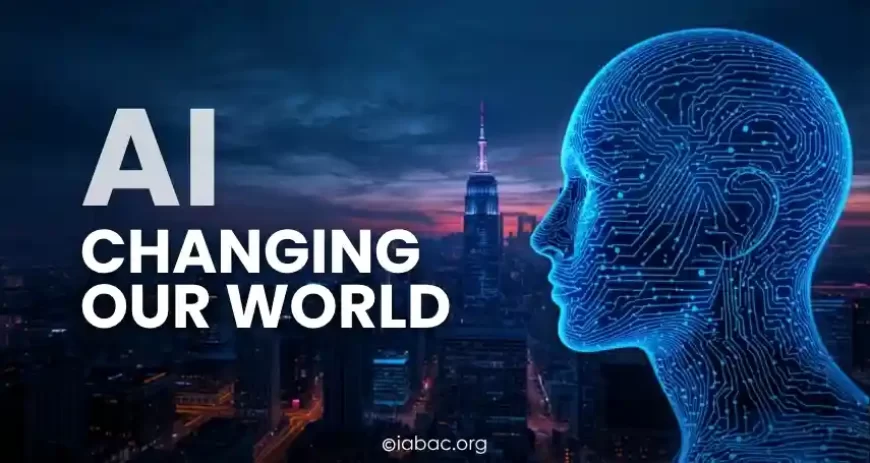
The truth is simple: AI is changing the world forever, and there’s no going back. Whether you’re a business owner, a student, a parent, or just someone scrolling through your phone, AI has already touched your life in ways you might not even realize.
In this article, we’ll break down exactly how AI is reshaping industries, economies, and everyday human experiences — in a way that’s easy to understand, even if you’ve never written a line of code in your life.
1. AI Is Transforming Healthcare As We Know It
One of the most powerful changes AI has brought is in healthcare. AI-powered tools can now detect diseases like cancer, diabetic retinopathy, and heart conditions earlier and more accurately than many traditional methods.
Hospitals are using AI to:
- Predict patient risks before symptoms even appear
- Speed up drug discovery (something that used to take years now takes months)
- Assist surgeons with robotic precision
- Personalize treatment plans based on genetic data
For millions of people, this means earlier diagnoses, better treatment, and ultimately, longer and healthier lives.
2. The Way We Work Is Being Redefined
Let’s be honest — the fear of “AI taking jobs” is real, and it’s a conversation happening in every industry. But the full picture is more nuanced than that.
Yes, AI is automating repetitive tasks — data entry, basic customer service, simple content writing. But at the same time, it’s creating entirely new job categories: prompt engineers, AI trainers, automation specialists, and AI ethics consultants didn’t even exist ten years ago.
Instead of replacing humans entirely, AI is becoming a co-worker — handling the boring, repetitive stuff so humans can focus on creativity, strategy, and emotional intelligence — things machines still can’t fully replicate.
3. Education Is Becoming Personalized
Traditional classrooms follow a “one-size-fits-all” approach. AI is breaking that mold.
With AI-powered learning platforms, students can now get:
- Personalized study plans based on their learning speed
- Instant feedback on assignments
- 24/7 tutoring through AI chatbots
- Language translation tools that break down learning barriers
This means a student in a small village with limited resources can now access the same quality of learning support as someone in a major city — something unimaginable just a few years ago.
4. Everyday Life Has Quietly Become “Smarter”
Think about your daily routine. You probably already interact with AI more than you realize:
- Your phone’s autocorrect and predictive text
- Voice assistants like Siri, Alexa, and Google Assistant
- Netflix and YouTube recommending exactly what you want to watch
- Google Maps predicting traffic and suggesting the fastest route
- Spam filters keeping your inbox clean
None of this feels dramatic — but that’s exactly the point. AI has become so seamlessly integrated into daily life that we barely notice it anymore. It’s not the flashy robots we imagined; it’s the quiet, invisible assistant working in the background.
For companies, AI has become a competitive advantage. Businesses now use AI to:
- Analyze customer behavior and predict future trends
- Automate marketing campaigns
- Detect fraud in real-time
- Optimize supply chains and reduce waste
Small businesses that once couldn’t afford expensive market research can now use affordable AI tools to compete with larger corporations. This is leveling the playing field in ways that were never possible before.
6. The Rise of Creative AI
Perhaps the most surprising shift is AI stepping into creative fields — writing, art, music, and video production. Tools can now generate images from text prompts, write articles, compose music, and even edit videos.
This doesn’t mean human creativity is being replaced. Instead, it’s being amplified. Artists, writers, and content creators now have powerful tools to bring their ideas to life faster than ever before.
7. The Challenges We Can’t Ignore
Of course, this transformation isn’t without its concerns:
- Job displacement in certain industries
- Privacy issues around data collection
- Bias in AI algorithms if not trained responsibly
- Over-reliance on technology reducing critical thinking skills
Being aware of these challenges is just as important as celebrating AI’s benefits. The goal isn’t blind adoption — it’s responsible, thoughtful integration.
Conclusion: The Future Is Already Here
AI isn’t coming — it’s already here, quietly reshaping healthcare, education, business, and daily life. The question isn’t whether AI will change the world. It already has.
The real question is: how will you adapt, learn, and grow alongside it?
One thing is certain — those who understand and embrace AI today will be the ones leading tomorrow.